
How to Check for a Kalamazoo County Warrant
The first step is a clean case search. Open MiCOURT Case Search and pick the right Kalamazoo route. Type the last name, or paste a case number if a ticket or notice gave one. Birth year helps with common names. Look for active cases, recent hearing events, and any failure-to-appear entry. Those are warrant clues. A clean MiCOURT view does not rule out a sealed warrant, but it rules out the most common ones.
The second step is a custody check. Run the same name through the Sheriff Inmate Inquiry portal. If the person is already in jail, the warrant may already be served and the case is moving toward arraignment or a hearing. The third step is direct contact. Call the issuing court clerk, or talk to a Michigan attorney before any in-person visit to a courthouse. These three steps cover the realistic public-access workflow in Kalamazoo County today.
- Run a MiCOURT case search for the person's name. Use the 8th District route for misdemeanors and traffic, and the 9th Circuit route for felonies after bindover.
- Read the case header for active status, bond forfeiture, or a failure-to-appear event. Each can hint at a live bench warrant.
- Run the Sheriff Inmate Inquiry to see if the person is already in custody at the county jail.
- Call the issuing court clerk to confirm whether a warrant is active. Have the case number ready.
- Talk to a lawyer before going to court. The right plan can save jail time, money, and a missed work day.
No Standalone Official Kalamazoo Warrant Portal
Kalamazoo County does not publish a standalone "active warrants" search portal for the public. The county's published systems route warrant data through court case files and the jail booking record. That fact shapes every honest warrant lookup in the county. A clean public list of names with open warrants is simply not part of the county's online stack. Anyone who claims to offer one is either pulling old court data, scraping unrelated records, or guessing.
That is why third-party "free warrant search" sites should not be used to make any real decision. Many charge a fee for stale data. Some show a person as wanted long after a warrant was quashed or served. A few mix up people with the same name and create a false hit that follows the wrong person for years. The safer path is the official court and sheriff sources, plus a direct phone call to the court that issued the order. Those sources are tied to live county systems and update with the case file.
For broader background on Michigan warrant law and the underlying rules, the Michigan courts site publishes court rules and forms, and the MCL 780.621 set-aside statute deals with what can be cleaned up later, after a case ends.
Types of Kalamazoo County Warrants
Not every warrant is the same. The category affects who issued it, how it must be cleared, and what risk it carries during a routine traffic stop. The short list below covers the warrant types most often seen in Kalamazoo court files.
- Arrest warrant
- Issued on a finding of probable cause that a person committed an offense. A judge or magistrate signs the order. Police can arrest the person at home, at work, or during a stop.
- Bench warrant
- Issued by a judge when a person fails to appear, violates probation, or ignores a court order. Bench warrants are the most common warrant type that shows up as a docket event in MiCOURT.
- Search warrant
- Authorizes police to search a place or item for evidence. Search warrants are not public before they are served, and the return becomes part of a court file later.
- Fugitive warrant or out-of-county hold
- Holds a person in Kalamazoo for another jurisdiction. The hold may come from a Michigan county, another state, or a federal agency.
- Civil bench warrant
- Comes out of contempt or enforcement steps in a civil or family case. Friend of the Court support cases sometimes trigger this kind of warrant.
Each type traces back to a court file. That is why the case search is always the first move. A live warrant rarely floats free of an underlying case number.
Where to Look Instead
Because no single county warrant portal exists, the table below shows the four official paths that together do the job. None of them is a true warrant search by itself. Used as a set, they cover the realistic public-access checks for Kalamazoo County.
| Source | What It Shows | What It Misses |
|---|---|---|
| MiCOURT Case Search | Case status, hearings, failure-to-appear events, bond forfeiture. Strong clue source for bench warrants. | Does not flag warrants as a single field. Sealed warrants and unfiled charges will not appear. |
| Sheriff Inmate Inquiry | Whether the person is in current custody at the county jail. Useful to confirm a warrant has been served. | Does not list outstanding warrants for people who are not in custody. |
| Issuing court clerk | Confirms whether a warrant on a case is active, recalled, or already served. The clerk is the live source of record. | Will not give legal advice. Will not negotiate bond or sentencing. |
| Attorney consultation | Plan for surrender, bond posting, motion to quash, or set-aside eligibility under Michigan law. | Costs money. A free legal-aid screening through Michigan Legal Help may help if income is low. |
The lead-in screenshot below comes from the Kalamazoo County Sheriff page, which is the parent site for the inmate inquiry and jail-information links used above.
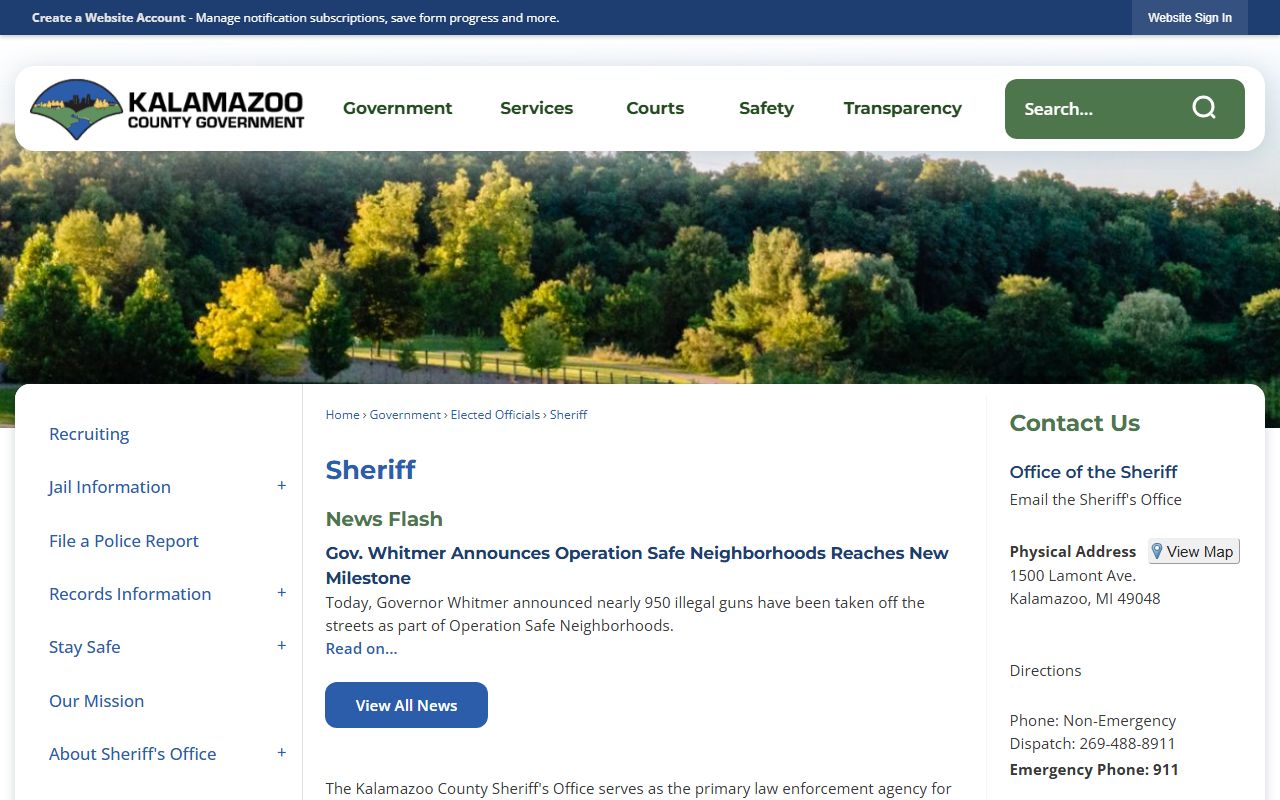
That landing page is the right starting point for warrant-related custody checks and jail-contact information.
How to Identify Possible Warrant Clues in MiCOURT
MiCOURT does not have a "warrant" checkbox. The clue work happens inside the case-detail screen. Open the case for the person. Scan the case header first. A case status of open or pending, paired with a missed hearing event, is the most common bench-warrant signal in Kalamazoo. The events list is the next stop. Look for a docket entry that uses the letters "FTA," which short-hands failure to appear. That entry often triggers a bench warrant on the same date or within a day.
Bond is the third clue. The case-detail bond module can show a forfeiture date, a status of forfeited, or a re-set bond. Each of those events tracks back to a person who did not appear or did not comply. A new hearing date entered shortly after a forfeiture is normal, but a long gap without a new event is a stronger warrant signal.
Charges and counts deserve a careful look. A felony case bound over from the 8th District Court to the 9th Circuit Court sometimes carries a warrant that was issued during the lower-court phase. The case-detail view in the higher court may not echo the original warrant date. The case-detail view in the lower-court route still does. That is one more reason to check both routes when a serious charge is involved.
Note: A missing case in MiCOURT does not always mean no warrant. Juvenile, sealed, and very new filings may not appear in public search.
Using the Sheriff Inmate Inquiry as a Custody Check
If the person is already in jail, the warrant may already be served. That is the simple logic behind running the Sheriff Inmate Inquiry as part of any warrant question. Type the last name. Keep the In Custody box checked for a current check, or uncheck it to look at recent bookings within a date range. The result column shows whether the person is held at the county jail, and the detail page shows the booking date, charges, total bond, and bond type.
Bond data is the strongest secondary clue. A booking that shows "OR Bond" means release on own recognizance. A booking that shows "Cash or Surety" means money or a bondsman is needed before release. A high bond on a single charge often points to a warrant on a more serious case rather than a fresh stop. The full inmate records page walks through every public field in the booking record and lays out the full search-field set for the portal.
The screenshot below points to the Kalamazoo County Jail Information page. That page lists the rules for visiting, sending mail, and posting money, all of which matter once a warrant ends in a booking.
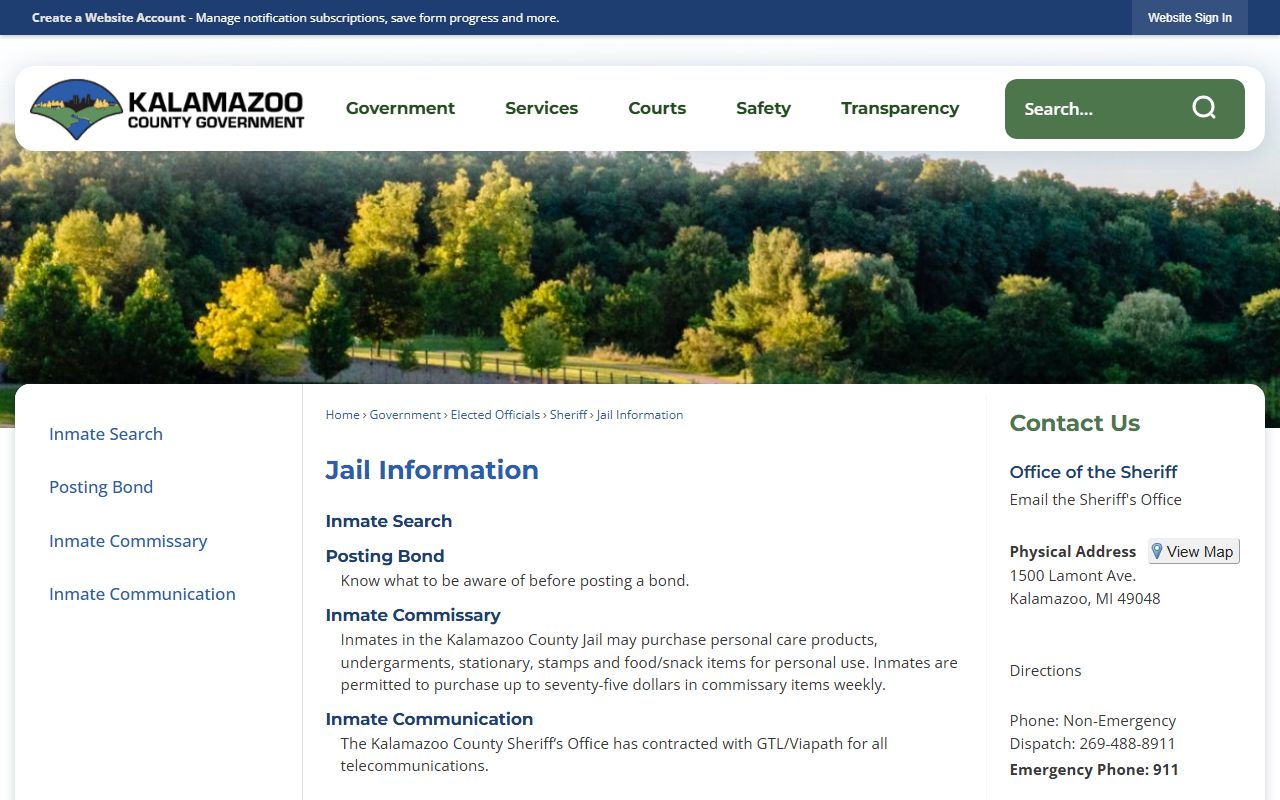
That live source covers the operational steps a family needs after a warrant arrest.
How to Resolve a Kalamazoo County Warrant
Resolving a warrant is mostly a court process. The judge who issued the warrant is the one who can recall, quash, or sign off on its clearance. A walk-in surrender at the jail is rarely the best first move. A planned step through the court usually works better, especially for bench warrants tied to a missed hearing or a probation issue.
- Call the issuing court clerk first. Confirm the case number, the warrant type, and any bond amount tied to the warrant.
- Talk to an attorney before any in-person trip to court. A defense lawyer can file a motion to set a hearing or to quash the warrant.
- Plan the surrender or court appearance. Some bench warrants can be addressed at a regular court session without an arrest. Others require a booking at the jail first.
- Post bond if required. Cash, surety, or 10 percent options apply by court order. The court sets the amount, and the jail or court window takes the payment.
- Attend the next hearing on time. Bring identification and any proof of compliance such as receipts, treatment records, or proof of address.
- Get a clearance confirmation. Ask the clerk for a printed disposition or a docket entry that shows the warrant recalled, served, or otherwise resolved.
Failure-to-appear cases sometimes resolve fast once the person shows up willingly. Probation-violation warrants can be harder. The judge weighs the underlying violation and may reset bond at a higher amount. That is why direct legal advice matters before any move.
Bond Posting and Bail Considerations
Michigan trial courts use a small set of standard bond types. Each one carries different cost and risk. The bond type on a warrant case sets how a release works after a warrant is served.
- Personal recognizance (OR or PR bond): the person signs a promise to appear. No money is paid up front.
- Cash bond: the full bond amount must be paid in cash. Money is returned at case end, minus court fees, when conditions are met.
- Surety bond: a licensed bondsman posts the bond. A non-refundable fee, often around 10 percent, goes to the bondsman.
- 10 percent bond: the court accepts 10 percent of the total bond as a cash deposit. The rest is owed only on a forfeiture.
The case-detail view on MiCOURT shows bond type, bond amount, posting date, and any forfeiture status. Family members posting bond should bring valid identification, the case number, and exact payment in the form the court accepts. The Sheriff's Office and the court clerk window each handle parts of the payment workflow, depending on whether the bond is being posted at the jail or at the court.
Role of an Attorney in Warrant Resolution
Talking to a lawyer before a warrant arrest is almost always smart. A Michigan defense attorney can pull the case file, read the warrant terms, and contact the prosecutor. In bench-warrant cases, the lawyer may be able to schedule a hearing on motion and avoid a fresh booking. In felony cases, the attorney can help arrange a surrender at a set time with a planned bond posting.
People who cannot afford a lawyer can ask for court-appointed counsel. Eligibility depends on income and case type. The local indigent-defense access point is the Kalamazoo County Office of the Public Advocate. The court runs the appointment process, and the defendant must file financial information. For civil bench warrants, court-appointed counsel may not be available, and a civil legal-aid screening through Michigan Legal Help is the better start.
Private referrals are also available. The State Bar of Michigan Lawyer Referral Service connects users to local lawyers who offer a short paid consultation on a fixed-fee basis. The Kalamazoo County Prosecutor handles charging and cannot give defense advice, but the office is the right place to ask about victim-impact and restitution questions.
After-Court Clearance Confirmation
A warrant is not always cleared the moment a judge says it is. The court clerk has to enter the order, and the data has to flow to the records used by police during traffic stops and other field checks. That lag is short, but it is real. Driving home from court right after a hearing is fine in most cases. Driving across state lines a day later, before the clearance posts in police databases, is the kind of move that can lead to a needless stop.
The safest workflow is to ask the clerk for a printed disposition or a stamped order showing the warrant is recalled, quashed, or served. Keep that paper for at least a few weeks. The same disposition will appear in the MiCOURT case-detail events list, and a screenshot or print of that screen is a useful backup. The case-detail view from the D08 District route or the C09 Circuit route is the live source.
Longer-term cleanup falls under Michigan's set-aside law. Eligible convictions can be set aside under MCL 780.621, and automatic Clean Slate rules apply to many older minor offenses. The set-aside process does not clear an active warrant on its own. It clears a finished conviction from ordinary public criminal-history access after the case is fully resolved.